Smart Water Metering
The Smart Water Metering pack gives water utilities and facility managers a live view of their distribution networks. Flow, pressure, water quality, pump state, and tank levels all land in pre-built dashboards with detection rules and scheduled reports already wired up. When a pipe bursts at 2 AM, the alarm fires before the first tenant complaint.
Seven detection rules watch the network around the clock — catching slow leaks, sudden bursts, water quality problems, and devices that go dark — with alerts delivered in seconds over email and the platform.
Why Magistrala
Your existing field devices probably already speak MQTT or HTTP, so there's nothing to replace in the field. Raw readings and validated data stay in separate channels, so a sensor glitch never triggers a false alarm. One dashboard template covers any number of zones or customer accounts. Compliance reports go out automatically every week.
Platform dashboards
See it in action
Purpose-built dashboards for every layer of your smart water metering deployment — from live telemetry to compliance reports.
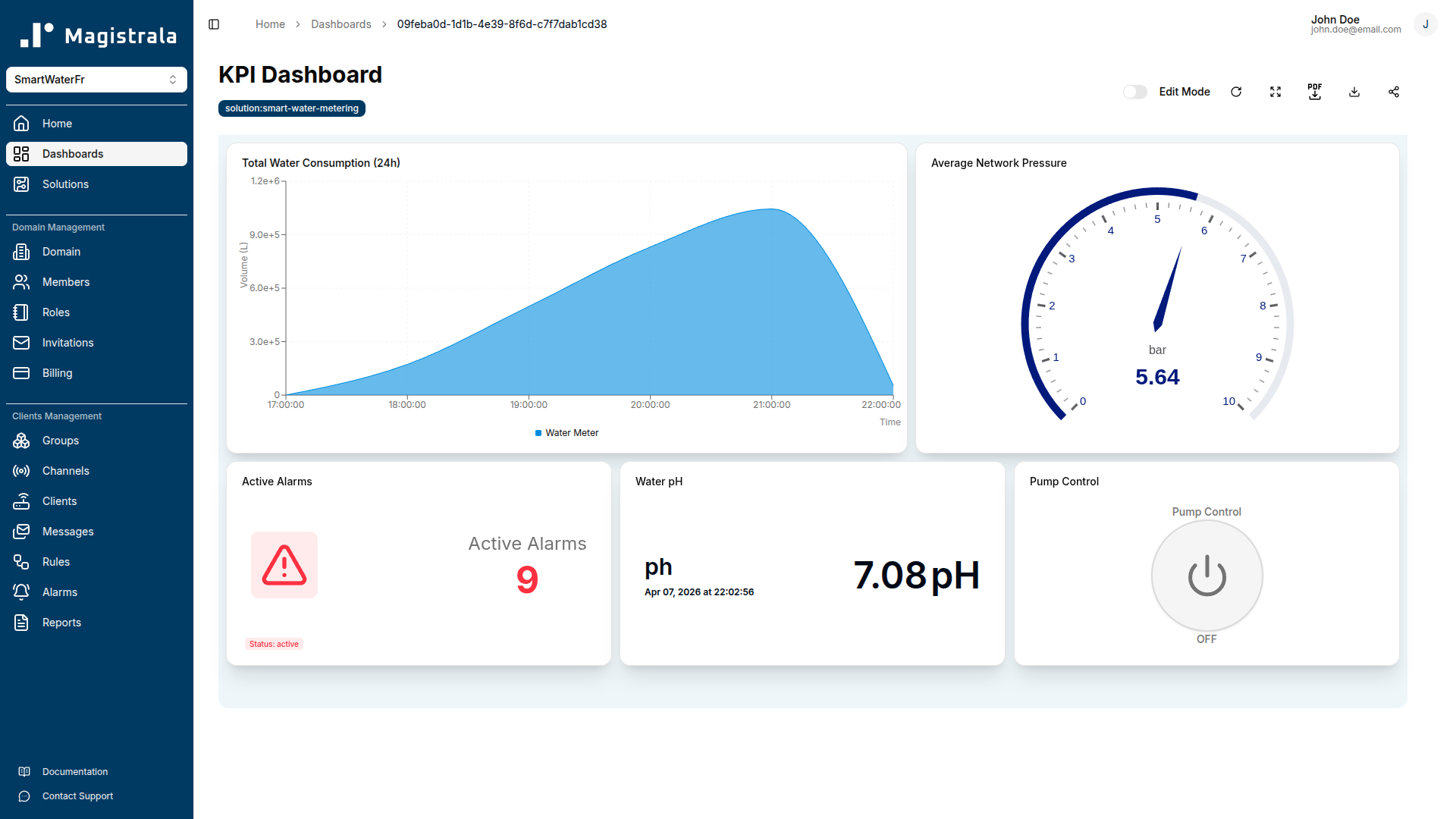
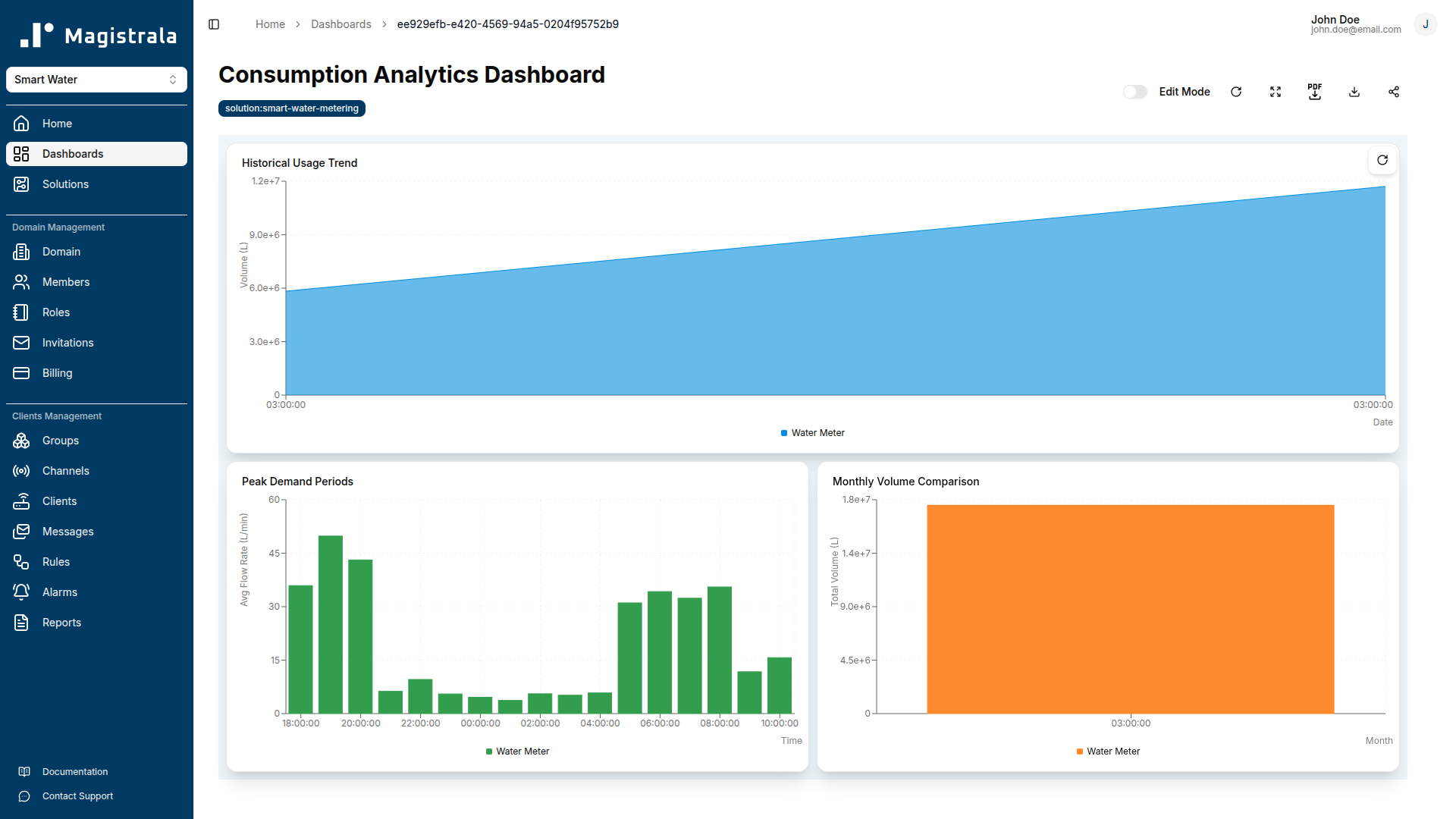
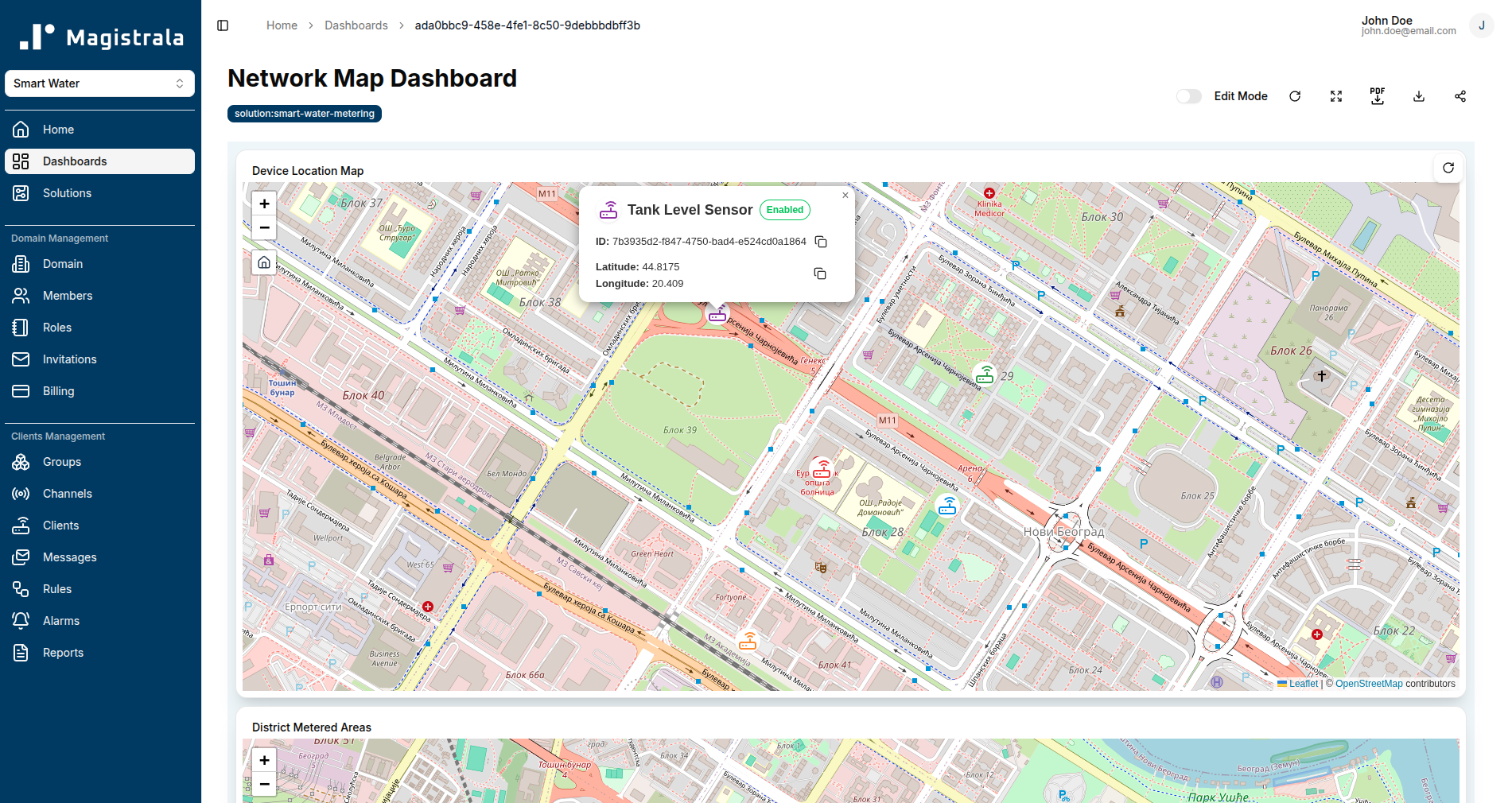
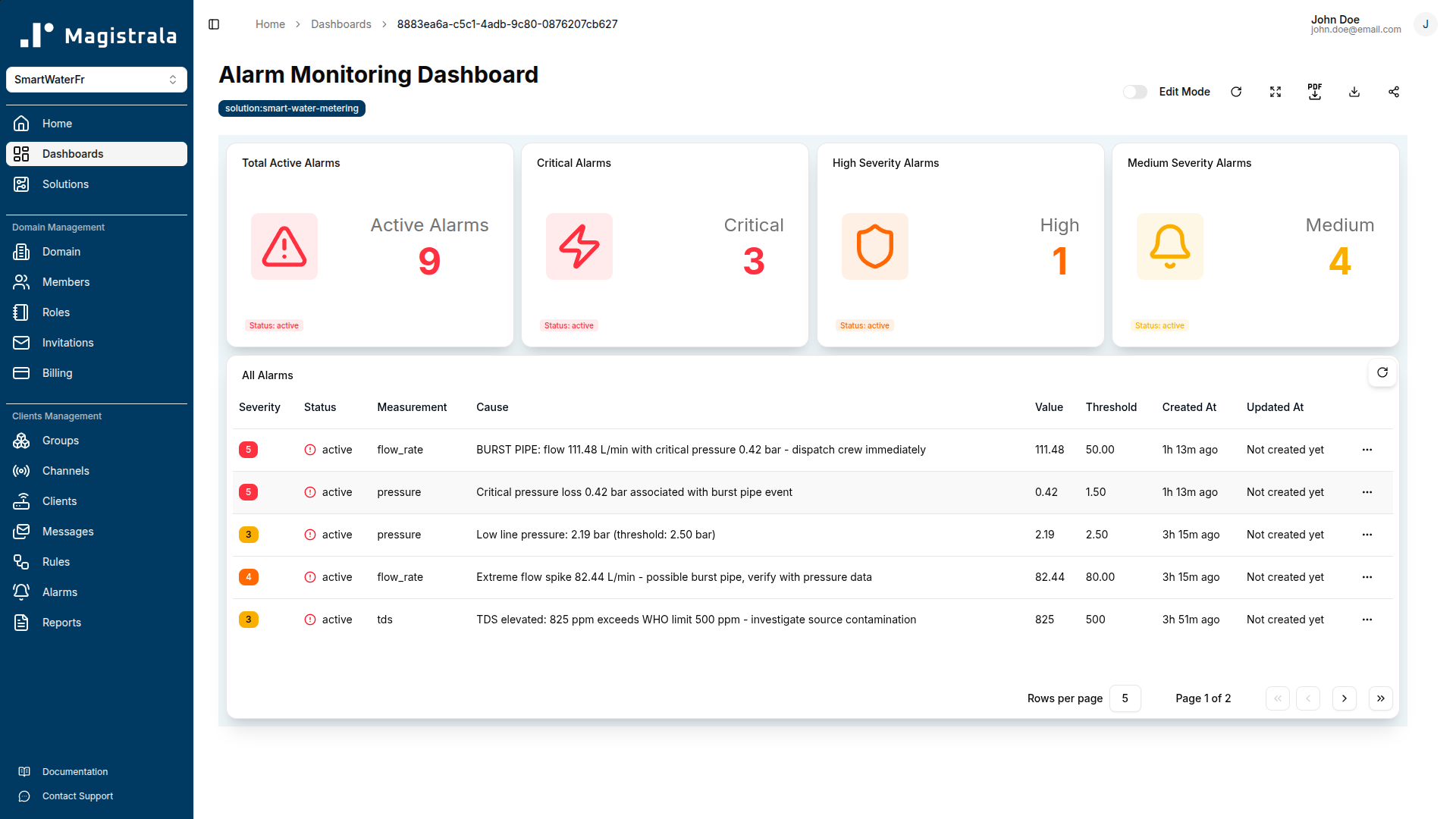
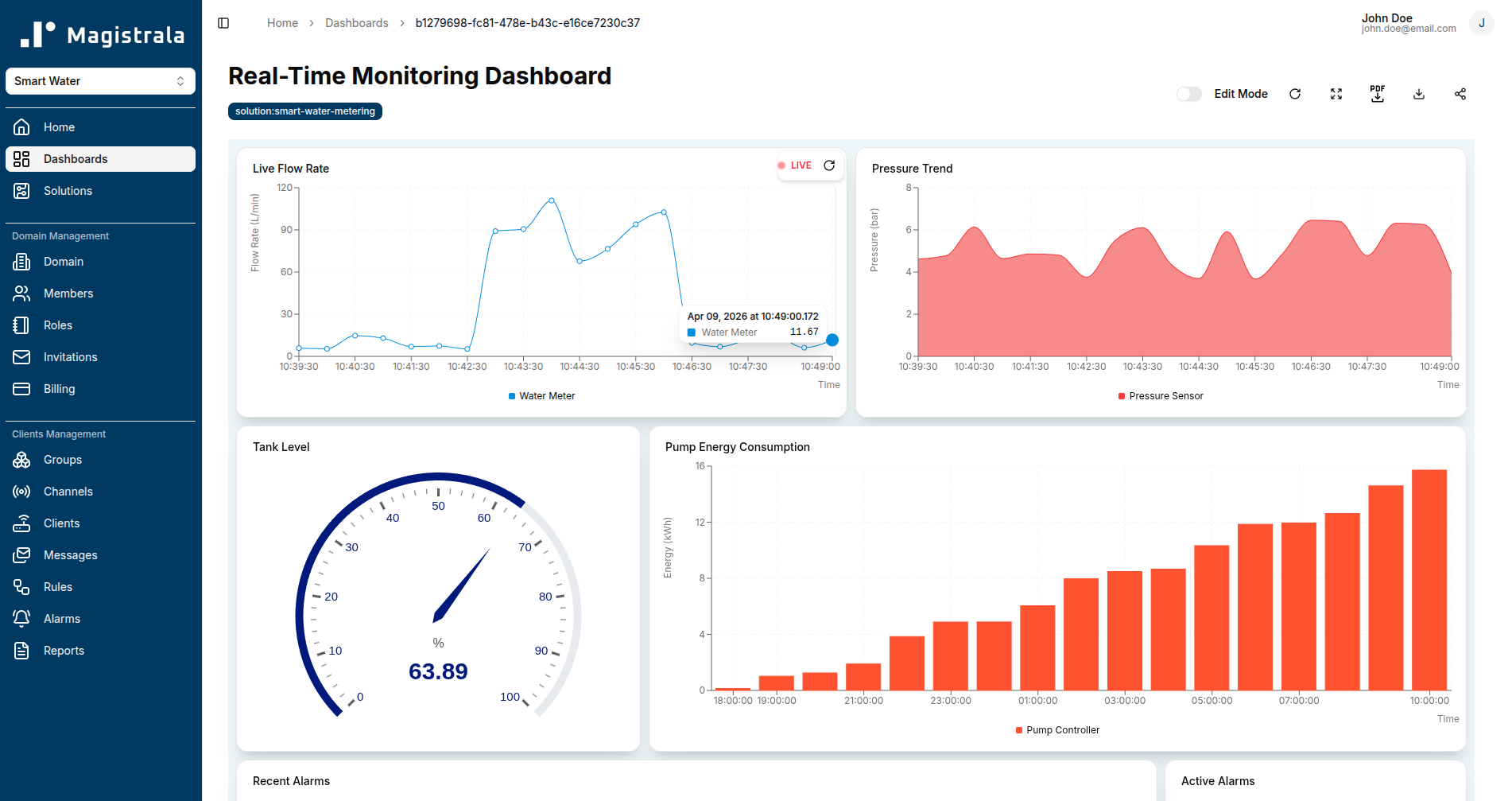
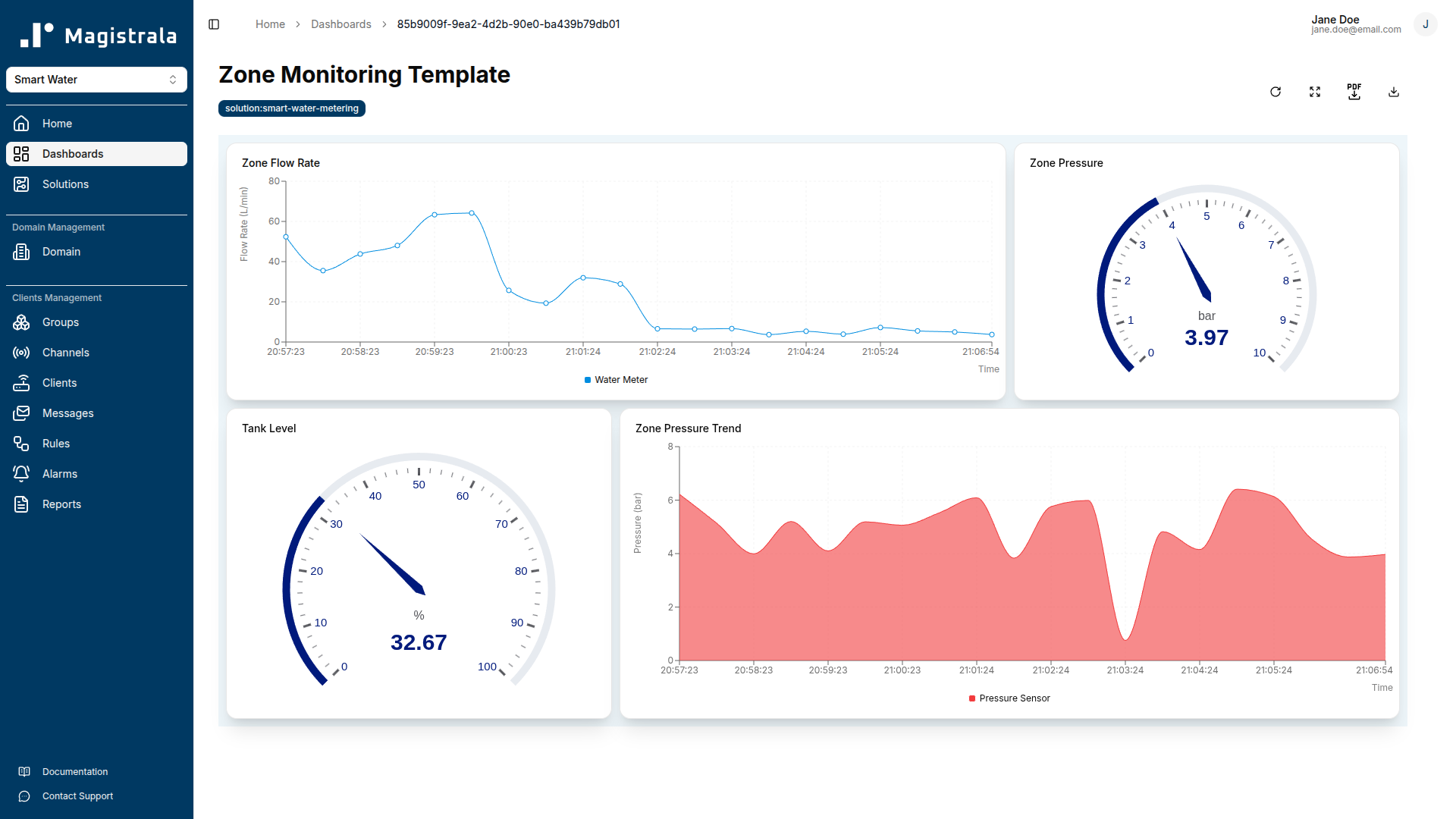
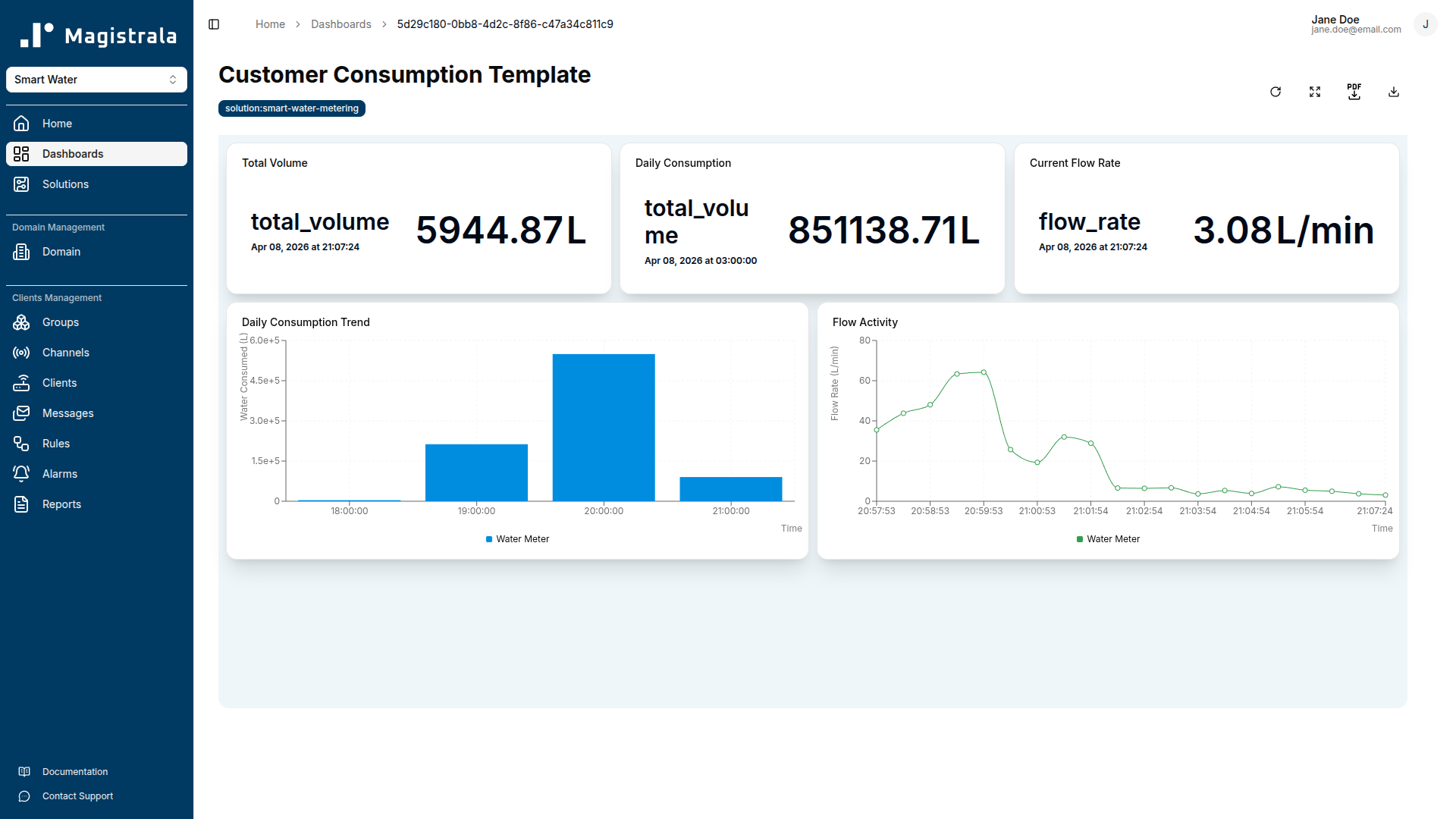
KPI Dashboard showing total consumption, network pressure, and water quality status
The challenge
Problems utilities deal with every day
The operational and financial costs of reactive water management are well documented. These are the specific pain points the solution pack addresses.
Finding out about bursts from tenants, not telemetry
Most utilities hear about burst pipes from a complaint call. By then, the damage is done. The alarm should fire first.
A CFO who can't explain Non-Revenue Water losses
NRW of 20–40% is common in ageing networks. Without zone-level flow data, there's no way to know where the losses are.
Water quality compliance reports assembled by hand
Pulling pH, turbidity, and TDS data from multiple systems every week, then formatting it for the regulator. Every single week.
How it works
From sensor to action
Four steps from field device to actionable insight
Ingest
Meters and sensors send readings over MQTT, HTTP, CoAP, or WebSocket. Every raw reading is saved immediately.
Validate
Each reading is checked for plausibility before alarm logic runs. Impossible values are discarded. Only clean data moves forward.
Detect
Rules watch the clean data continuously. Pressure drops while flow spikes? Leak alarm. Flow surges? Burst alarm. pH drifts? Quality alarm. Device goes quiet? Offline alarm.
Report
Daily consumption, weekly network performance, and weekly water quality reports go out automatically. Long-term records write to PostgreSQL.
Key Applications
Where utilities and property managers deploy smart metering
Municipal distribution network monitoring
Flow, pressure, and quality at DMA boundaries. Leaks detected within minutes. NRW trends tracked monthly.
Multi-site commercial and residential property
Tenants see their own usage. Building managers get aggregate consumption and burst alarms. No network-level data exposure.
Water quality compliance for regulated supplies
Continuous WHO-threshold monitoring. Weekly compliance reports delivered automatically. Full audit trail in PostgreSQL.
Pump station and storage tank management
Live pump state, energy draw, and tank levels. Spot inefficient pump cycles. Schedule refills before pressure drops.
Benefits
Why teams choose Magistrala for smart water metering
The solution pack removes the integration work — so your team can focus on outcomes, not infrastructure.
- Leak alarms fire within seconds of threshold breach - not hours after a tenant complaint
- Zone-level flow data identifies where NRW losses are occurring so rehabilitation spend goes to the right places
- Water quality compliance reports generate and deliver automatically every week, eliminating manual data assembly
- Device Health Monitor flags offline sensors within 10–20 minutes, preventing silent data gaps in regulatory records
- Tag-based templates scale a single dashboard definition across any number of zones or customer accounts without duplicating configuration
FAQ
Smart Water Metering — Frequently Asked Questions
Yes. Your meters don't need to support MQTT or HTTP directly. A gateway sitting between your field devices and the platform can handle the protocol translation — many gateways support NB-IoT, LoRa, OPC-UA, and other industrial protocols out of the box. Alternatively, Magistrala ships a LoRa adapter and an OPC-UA adapter that connect those networks natively. Either way, data arrives in the same Raw Telemetry Channel and flows through the same processing and detection rules.
Yes. The Leak Detection rule uses fixed thresholds by default (pressure < 2.5 bar for the warning condition), but you can deploy additional rule instances with zone-specific thresholds and assign each rule to the channel or group corresponding to that zone. The Zone Monitoring template supports per-zone pressure gauge scaling so operators see the correct normal range for their zone.
The pack provides the metered volume data that NRW calculation requires: zone-level flow totals from the Consumption Analytics dashboard, daily consumption from the Daily Consumption Report, and long-term volume records from the PostgreSQL archive. NRW calculation itself requires comparing those figures against billing data from your customer management system - the pack's data exports and report outputs are designed to feed into that calculation rather than replace it.
The Device Health Monitor raises a Warning alarm (Severity 3) within 10–20 minutes of the last received message, regardless of what the last reading showed. If the device went offline while reporting an out-of-range pH or turbidity reading, the quality alarm remains active in the alarm log until it is acknowledged or cleared. The processed telemetry and alarm records in PostgreSQL provide a complete timeline of what was reported before the device went silent.
Try the Smart Water Metering Solution Pack
Preconfigured clients, channels, rules, dashboards, reports, and alarms — ready in minutes on Magistrala Cloud.